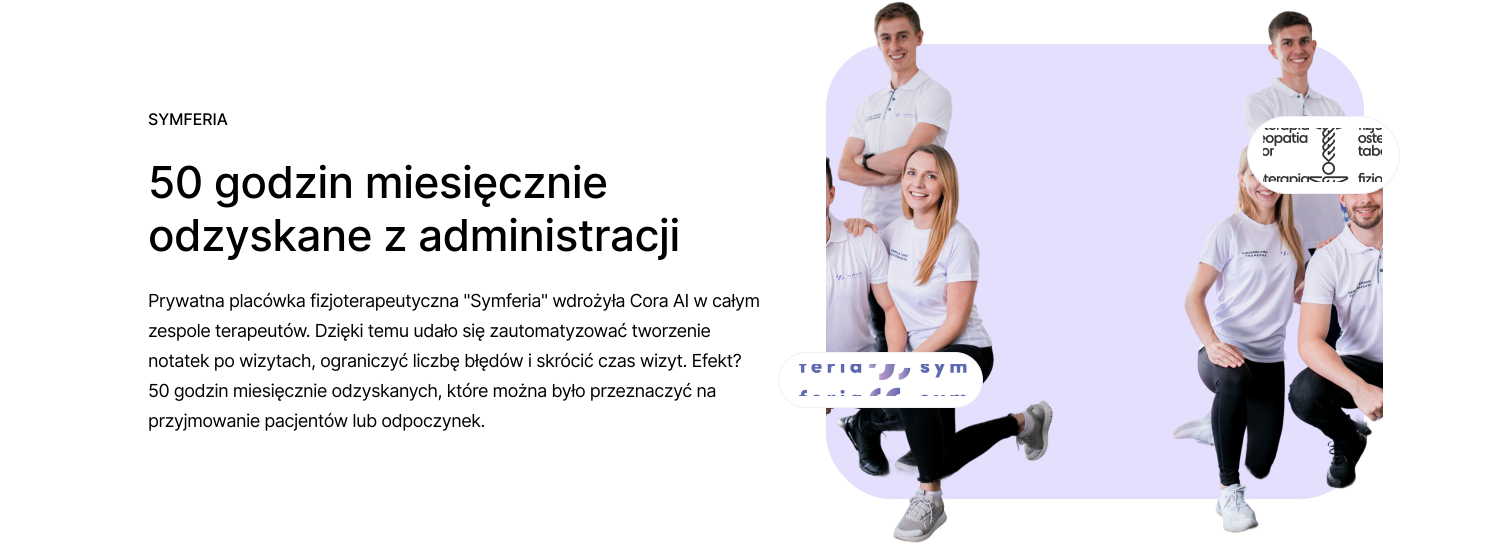
How the private physiotherapy clinic Symferia deployed Cora AI across the entire team of therapists, reduced documentation time by 60-80% and recovered about 50 hours per month that used to disappear into after-hours administration.
Key deployment results
recovered from administration across the team
less time spent on documentation by a single specialist
documentation is created faster, without after-hours typing
notes are more accurate, complete and logically structured
the therapist looks the patient in the eye, not at the screen
Cora AI deployed for every therapist at Symferia
Watch the deployment story
Dominik Tabor, osteopath, physiotherapist and owner of Fizjoterapia Osteopatia Tabor, talks about how Cora AI changed daily work with patients, the way documentation is created and the organisation of a therapist's workday. Full conversation: https://youtu.be/mCXA4kgsLDY.
Deployment context
Symferia, a private physiotherapy clinic, deployed Cora AI in the daily work of its team of therapists. The goal was to reduce time spent creating notes after visits, improve the quality of documentation, and offload specialists from administrative work done after hours.
The result? The team recovered about 50 hours per month that used to disappear into documentation. That time can now be spent on seeing more patients, running therapy more calmly, or simply resting after work.
Problem: the workday only ended after the last patient
Until recently, a specialist's workday didn't end with the last visit. After closing the practice, the documentation remained: notes to complete, therapy details to describe, recommendations to organise and information that had to be reconstructed from memory.
„I usually filled in documentation after hours. It took up a huge amount of time that I'd rather have spent on patients or simply resting."
In physiotherapy and osteopathy, documentation isn't an add-on to the work. It's an important part of the therapeutic process. A well-described visit allows the therapist to track patient progress, compare reactions to therapy, revisit earlier hypotheses and plan the next sessions better.
The problem was that with a high number of visits, it was hard to create precise notes without taking time away from the patient — or from yourself.
„Fighting with the keyboard meant the notes were sometimes less accurate than I'd like. Now I can focus on what matters most — on the intake and the therapy."
Goal: less administration, more therapy
Symferia was looking for a solution that would reduce manual documentation without complicating the therapists' work. The goal wasn't to deploy yet another system that would require extra clicking, new procedures and long team training.
- The therapist conducts the visit naturally.
- Cora AI helps turn the conversation and therapy session into documentation.
- The specialist organises the note faster after the visit.
- The patient gets more attention, and the therapist gets their time back.
Solution: Cora AI as support for physiotherapists
The breakthrough came when Cora AI joined the therapists' work. The system helps automate creating notes after visits. In practice, this means the therapist doesn't have to manually rewrite everything from scratch. They can focus on the conversation, examination, therapy and observation of the patient, while the documentation is created faster and in a more structured form.
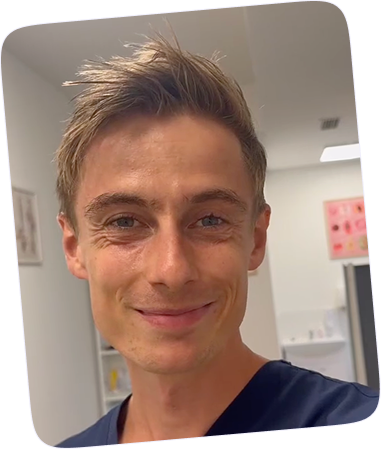
"Everything changed. I gained time and peace of mind, and above all — better quality hypotheses and diagnoses. The whole treatment process became more organised."
This matters especially in physiotherapy, where a lot of information appears during the conversation and examination: location of pain, reaction to movement, range limitations, injury history, prior treatments, the patient's habits, lifestyle and home-exercise recommendations. Without technological support, it's easy to shorten some of this information, skip it, or only write it down hours later.
How working with Cora AI looks at a physiotherapy clinic
1. The therapist conducts the visit as before
The conversation with the patient, intake, functional examination and therapy happen naturally. The specialist doesn't have to break contact to keep typing information into the system throughout the visit.
2. Cora AI helps turn the visit into a note
The most important information from the intake, observations and therapy is organised into the form of medical documentation.
3. The specialist reviews and completes the description faster
Instead of creating the note from scratch after the visit, the therapist works on a ready structure that they can check, correct and approve.
4. Documentation becomes more consistent
Notes are more complete, organised and easier to use during subsequent visits.
5. The patient gets more attention
The therapist no longer has to choose between accurate documentation and patient contact. They can listen, observe, react and at the same time ensure the quality of the visit description.
„I can look patients in the eye, listen and respond, instead of nervously glancing at the screen. It builds trust and a completely different quality of collaboration."
Before and after deployment
Before deployment
- Documentation was often filled in after hours.
- Therapists lost time manually rewriting information after visits.
- Notes were sometimes less detailed because they were written under time pressure.
- The specialist had to choose between looking at the patient and the screen.
- After an intense day, there was still administrative "wrap-up" of visits left.
After deploying Cora AI
- Documentation is created faster and in a more structured way.
- The team recovers about 50 hours per month.
- Specialists spend less time writing and more time on therapy.
- Notes are more accurate and more useful in further treatment.
- The patient feels the therapist is present, attentive and focused on the conversation.
Result: 50 hours per month recovered from administration
Deploying Cora AI allowed the Symferia team to recover about 50 hours per month. This time was previously scattered between visits, breaks and after-hours work. In practice it meant less rest, more fatigue, and a greater risk that documentation would be created in a hurry.
For the clinic, this means the ability to see more patients or improve the team's work comfort. For the specialist — less administration after hours. For the patient — a more attentive visit and a better-organised therapy process.
60-80% less time on documentation
In a specialist's daily work, the change was even more noticeable. Dominik estimates that he was able to recover up to 60-80% of the time he previously spent on documentation.
„It's a huge change."
This result doesn't only mean writing notes faster. It means less tension after the visit, less backlog and less feeling that documentation drains the energy needed to work with the patient. Cora AI doesn't remove the specialist's responsibility for documentation — but it helps shorten the most time-consuming stage: creating a note from a blank page.
The biggest change: documentation stopped being a burden
The most important effect of the deployment isn't only about time. It's about the sense of control over one's own workday.
„Documentation stopped being a burden, and I got my time back."
Thanks to Cora AI, the specialist no longer has to end the day with a list of pending visit descriptions. They don't have to reconstruct conversation details from memory or fight the keyboard after several hours of patient work. They can focus on what matters most in therapy: understanding the patient's problem, forming better hypotheses, choosing the right approach and calmly leading the treatment process.
Intuitive deployment without disrupting the team's work
One of the most common concerns before deploying new technology in a medical practice is the time needed to learn it. Therapists don't want another tool that complicates the visit, requires many clicks and takes attention away from the patient. With Cora AI, that barrier quickly disappeared.
„Cora is genuinely intuitive. Within a few days I felt it was working with me, not against me."
At Symferia, Cora AI was deployed across the entire team of therapists precisely because it actually offloaded them from tasks they disliked, instead of adding another layer of administration.
Safety and control on the specialist's side
Cora AI supports documentation creation but doesn't replace the physiotherapist, osteopath or the specialist's clinical decision. The therapist conducts the intake, examines the patient, interprets symptoms, forms hypotheses and decides on the therapy. AI helps organise the information and speed up creating the note. The specialist retains full control over the documentation content, review and approval.
Technology that gives time back to specialists
Deploying Cora AI at Symferia showed that automating documentation can have a very concrete impact on a clinic's daily life. It's not only about a modern tool. It's about recovering the time that used to disappear into administration.
50 hours per month is dozens of additional visits, more room for clinic growth, or more rest for the team. For the specialist — less after-hours work. For the patient — more attention during the visit. For the clinic — better organisation and greater efficiency.
„I would definitely recommend this solution to other specialists. If you're not yet using this kind of tool, it's worth seriously considering it. Let AI handle what you don't enjoy — and you focus on what really matters."
Case study summary
Symferia deployed Cora AI across the entire team of therapists to reduce time spent manually creating documentation after visits. The deployment automated notes, improved their quality, reduced the number of errors and offloaded specialists from after-hours administration.
- 50 hours per month recovered from administration.
- 60-80% less time spent on documentation by the specialist.
- Less work after hours.
- More organised and accurate notes.
- Less time needed to wrap up a visit.
- More attention for the patient during the conversation and therapy.
- Greater peace of mind and better team workflow.
Frequently asked questions
How much time did the Symferia team recover with Cora AI?+
About 50 hours per month that used to disappear into manually updating documentation after visits. A single specialist recovered up to 60-80% of the time they previously spent writing notes.
Does Cora AI replace the physiotherapist or osteopath?+
No. The therapist conducts the intake, examines the patient and makes the clinical decisions. Cora AI only helps organise the information and speed up creating the note, which the specialist reviews and signs off.
Does deployment require long team training?+
No. Dominik Tabor emphasises that Cora AI is intuitive and within a few days the team felt that the tool supported them rather than complicating their daily visits.
Are the notes more accurate than when written manually?+
Yes. The documentation is more complete, structured and logically organised, because the specialist doesn't have to create it in a rush after the visit or reconstruct details from memory.
Does the solution work in a small practice?+
Yes. Cora AI works both in single practices and in multi-therapist physiotherapy clinics like Symferia.